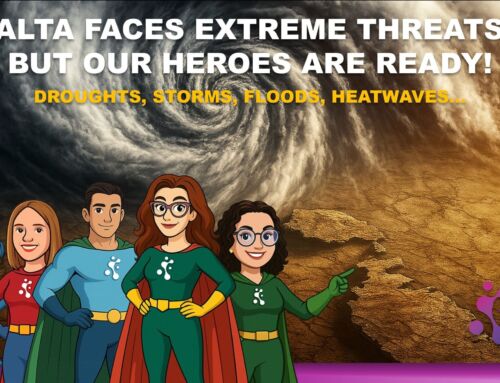
Malta, despite its declarations and commitments, remains behind in achieving the ambitious climate targets set by the European Union. The European Green Deal and the Fit for 55 legislative package are critical steps towards reducing carbon emissions and achieving climate neutrality by 2050. However, Malta’s slow progress can be attributed to a combination of economic factors, fragmented climate governance, and the underutilisation of the Research Innovation Unit (RIU). The RIU was established at the local government level to address climate challenges at local and regional level, but despite law, remains under-integrated into the central government’s climate strategies. This editorial explores the reasons why Malta is struggling to meet its climate goals and offers recommendations for a more inclusive and decentralised approach to governance.
Economic Model and Structural Challenges
One of the most significant barriers to Malta’s climate progress is its economic reliance on carbon-intensive industries, particularly construction and tourism. These sectors contribute heavily to greenhouse gas emissions, waste generation, and environmental degradation. Overdevelopment has led to urban sprawl, increased traffic congestion, and heightened emissions from both transport and the built environment. This has reduced Malta’s capacity to naturally absorb emissions and worsened its Urban Heat Island effect.
Malta has made progress in adopting renewable energy, notably solar energy. However, other renewable sources, such as wind energy, remain vastly underutilised. Malta’s renewable energy contribution is approximately 13%, which lags behind the EU average of 23%. The country’s energy transition has been described as piecemeal, insufficient to meet long-term sustainability targets.
Fragmented Climate Governance: Centralisation vs. Local Empowerment
Malta’s centralised approach has inadvertently limited the potential of local councils and specialised units, such as the RIU, to drive community-level climate initiatives. Under Article 33 1 (q) of the Local Councils Act, local councils are empowered to manage environmental functions, including climate change mitigation and adaptation. However, these councils often lack the financial resources and technical expertise needed to implement meaningful climate actions.
The creation of a Climate Change Authority by the central government is a step towards more structured climate governance, but without integrating local councils and units like RIU, the national strategy remains incomplete. Successful models in other EU countries, such as Denmark and Germany, demonstrate the importance of decentralised governance, where local governments play a pivotal role in implementing innovative, community-driven climate solutions.
The Role of the Research Innovation Unit (RIU)
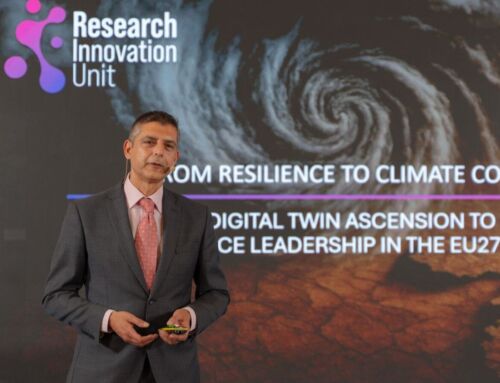
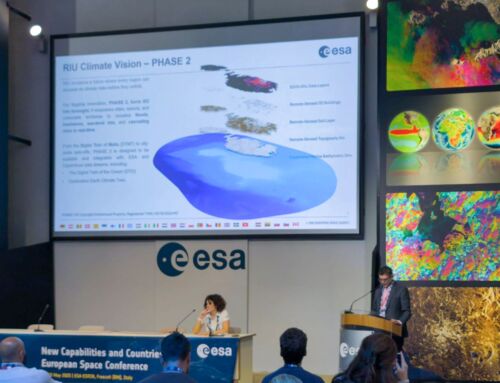
The Research Innovation Unit (RIU), a specialised unit at the local government level, was established to address the governance gaps left by the central authorities. RIU has been a leader in climate action, conducting extensive research and driving initiatives aligned with both EU and national climate goals. It has garnered recognition from key European bodies, including the European Commission and the European Environment Agency (EEA), for its innovative approach to tackling Malta’s unique environmental challenges.
Despite its achievements, the central government has yet to fully integrate RIU into the national climate strategy. This represents a missed opportunity for collaboration. By working together, the central government and RIU could leverage each other’s strengths to create a cohesive, comprehensive approach to climate action. The RIU’s research on urban heat islands, renewable energy projects, and flood management could greatly complement national, regional and local policies.
A Collaborative Approach to Climate Action
Malta’s current approach misses the potential of a bottom-up strategy, where local councils and specialised units like the RIU are empowered to act. Local councils, when provided with the right resources, could implement inter-alia: pedestrianisation initiatives, low-emission zones, and urban greening projects—addressing key issues like overdevelopment and car dependence. A bottom-up approach would enable local solutions tailored to Malta’s diverse regions, enhancing resilience and sustainability.
The declaration of a climate emergency in 2019 was a positive symbolic step towards recognising the urgency of climate action. However, this declaration must be backed by action, empowering the actors closest to the challenges on the ground. Central government should view the RIU as a vital partner in meeting the nation’s climate goals, aligning its initiatives with RIU’s expertise and community-based projects.
Financial and Technical Resource Gaps
A significant barrier for both local councils and the RIU is the lack of direct funding and technical expertise capacity building. Without adequate resources, these entities are unable to fully implement significant climate projects. While EU funds are available under programs like Horizon Europe and Interreg, these are highly competitive, and local councils need more support from the central government’s direct funding.
Addressing these resource gaps is essential to unlocking Malta’s potential for effective climate action. By providing financial and technical support to the RIU and local councils, the central government can enable a wave of community-driven projects, bringing Malta closer to its 2030 and 2050 targets.
A Call for Collaborative Governance
For Malta to meet its climate targets, the central government must recognise the importance of collaborating with specialised units like the RIU and local councils. These entities are crucial partners in climate action and can help drive innovation and community-level engagement. A combination of centralised coordination and empowered local action could greatly enhance Malta’s response to climate change.
The integration of the RIU into a cohesive national strategy would allow Malta to benefit from its technical expertise and innovative research. By working together, Malta can create a robust, decentralised climate governance model that ensures the country meets its 2030 and 2050 climate targets.
References
- Malta Today. (2019). A Climate Change Emergency and a New Malta. Available here.
- The Malta Independent. (2019). Parliament Declares Climate Change Emergency. Available here.
- The Malta Independent. (2023). Malta Could Miss Its 2030 Targets Unless Effective Action Is Taken, Expert Warns. Available here.
- The Malta Independent. (2019). The Climate Emergency. Available here.
- The Malta Independent. (2023). Is Malta Taking Climate Policy Seriously?. Available here.